摩登家庭
Economist explores human stories behind development_我的网站

一 |
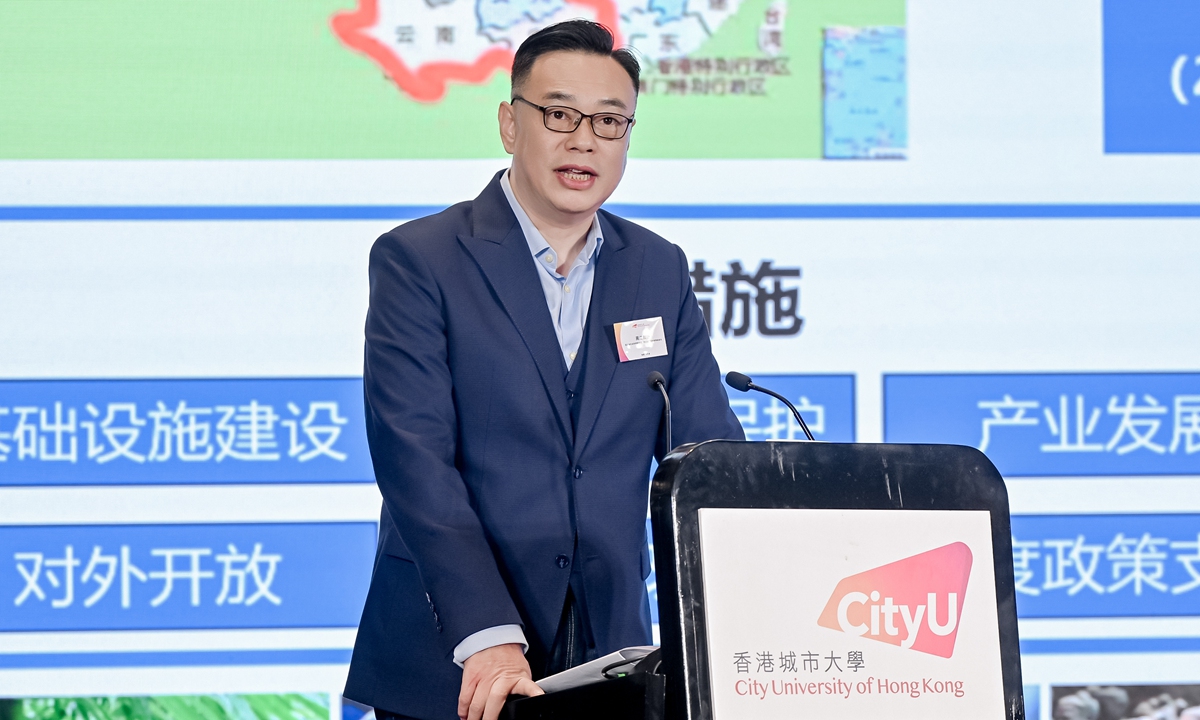
Zhou Jiang speaks at an event. Photo: Courtesy of Zhou Jiang
Zhou Jiang, a researcher at the Sichuan Academy of Social Sciences, has a favorite book:
White Deer Tableland or
Bai Lu Yuan by renowned writer Chen Zhongshi.
As vice president of the Regional Science Association of China (RSAC), Zhou told the Global Times that a lifetime of reading has profoundly shaped the way he sees and understands the world. It ultimately led him to a career in research and academia, where he teaches and pursues scholarly work.
Since earning his PhD in economics in 2000, he has devoted himself to the study of regional science and economics, a field that demands a constant crossing of disciplinary boundaries, drawing on the fields of geography, sociology, history, and ecology among others.
"Reading has kept alive my sense of curiosity and taught me to ask questions with patience and persistence: Where do disparities in regional development come from? How do policies affect different groups in society? And how can a region pursue both efficiency and equity so that development is not merely effective, but also imbued with a greater sense of humanity and warmth?" Zhou noted.
Founded in 1991, RSAC is a national academic society dedicated to advancing domestic and international academic exchange and cooperation, providing consulting services on spatial planning, urbanization, and regional development, and offering intellectual support for China's modernization drive.
The 57-year-old researcher noted that reading has empowered him in two distinct ways.
"The first is discernment. When confronted with a complex issue, I try not to settle for a simple conclusion. Instead, I make an effort to understand its broader context, how it has unfolded, and the perspectives of the different people involved," he said.
"The second is a sense of inner steadiness. Setbacks are an inevitable part of both life and work. Good books remind us that hardship is never ours alone to bear; countless people before us have faced circumstances more difficult than our own, made difficult choices, and found the strength to carry on. Reading cannot solve every problem for us, but it can help us remain calm when challenges arise, giving us the clarity and resilience that allow us not to panic or give up too easily," he said.
Historical depth
Each time Zhou returns to the White Deer Tableland, he finds something different in its pages.
"When I first read it as a young person, I was drawn primarily to the characters and the twists and turns of their lives. Later, as I began researching regional economics, I found myself paying closer attention to the changes in the land, the countryside, families and social order presented in the story. Now, approaching 60, I have come to appreciate more deeply the choices the characters make, the constraints they face, and the quiet perseverance they show amid the sweeping currents of their times," he said.
White Deer Tableland uses Bai Lu village in Northwest China's Shaanxi Province as a microcosm, tracing the feuds and intertwined fortunes of three generations of the Bai (literally meaning white) and Lu families. Through their stories, it captures more than half a century of sweeping historical change, from the final years of the Qing Dynasty (1644-1911) to the 1970s and 1980s. The novel won the Mao Dun Literature Prize, one of China's top literature awards, in 1997.
Zhou prefers literary works with historical depth and a keen eye for social change.
Regional economics may appear to be concerned with the spatial distribution of industries, population and resources, but at its heart, it is about how people live on a particular piece of land, and why some places flourish while others decline, he noted.
In this sense, literature and history are more than pastimes beyond professional research. They often help him understand the historical context, cultural traditions and social mentality that lie behind economic data, he said.
When reading novels, Zhou said that he often pays close attention to the relationship between people and the places they inhabit: How the land shapes the local character, how transportation transforms a region, and how shifts in industry reshape families and villages. Such details may not offer a direct conclusion, but they broaden a researcher's perspective. They also serve as a reminder that research should look beyond growth rates and statistical indicators to consider the sense of fulfillment experienced by ordinary people and the dignity of human beings.
Understanding ourselvesOnce, while tidying his study, he came across a book filled with notes he had scribbled in his early years. Among them was a question that particularly caught his attention: "In the face of sweeping changes in the times and profound social transformation, what can a person truly determine for himself?"
Looking at those words he had written in his youth was like coming face to face with the person he had been decades ago.
Reading is not simply the act of understanding a book; it is also a record of a person's own growth, he said. The same book can reveal something entirely different when read at different stages of life.
When we are young, we turn to books in search of answers; but when we become seasoned, we read more to understand life, to understand others, and ultimately, to better understand ourselves, Zhou said.
In this era of fragmented information, AI can help people access information quickly, organize materials, and gain a basic understanding of unfamiliar fields. Yet deep reading, Zhou said, allows people to see how a conclusion is reached — what evidence supports it, where its boundaries lie, and what alternative interpretations it may invite.
What truly shapes a person, after all, is not how much information they have browsed, but the words that have made them pause and reflect - and the words that have remained with them for many years, he added.
。 AI 芯片的竞争正在进入一个新阶段。
芯片开始反过来适配模型,而且是只为单一模型定制。据报道, Alphabet 正在开发一款内部代号 Frozen v2 的芯片,把 Gemini 模型的核心神经网络架构直接固化到硅片的物理电路中。消息发布当天,Alphabet 股价盘中最高涨 3.7%。一颗两年后才会量产的芯片,让市场为一张蓝图买了单。

二 |
这不是又一颗 AI 芯片的事,AI 基础设施的竞争规则或许发生了改变。
把架构冻进硅片
传统 AI 芯片的工作方式是一条流水线。模型存在内存里,芯片从内存中抓取权重和架构参数,在计算单元中跑一遍,再把结果写回去。每生成一个 token,流水线就要完整转一轮。

三 | 大量功耗花在搬运上,花在计算上的反而不多。

四 |
Frozen v2 把 Gemini 的神经网络架构,包括层级结构、注意力机制、残差连接,在芯片设计阶段就冻进了电路。这些在传统推理中需要反复运算和搬移的结构信息,变成了物理电路的一部分。知情工程师称,这颗芯片的单位功耗 token 处理量将比现有 TPU 提升 6 到 10 倍。它独立于 TPU 产品线,不会取代后者,目标量产时间定在 2028 年。

五 |
Frozen v2 固定的是架构,权重可以更新。

六 | 最初的 Frozen v1 方案由 Google DeepMind 首席科学家提出,试图连模型权重一起固化。谷歌后来放弃了这个方案,因为芯片只能跑一个版本的 Gemini,模型一迭代就作废。Frozen v2 的折中是只锁骨架不改血肉。

七 | 截至目前,谷歌尚未最终确定有多大比例的架构会被硬编码进硅片。

八 |
这个做法的前提是,Gemini 的架构已经稳定到了值得用硅片去记住的程度。从 2023 年 12 月 Gemini 1.0 发布到现在的 3.5 Flash,底层 Transformer 架构的核心组件,包括多头注意力、前馈网络、层归一化,没有经历过根本性变化。真正的迭代发生在规模、训练数据和后训练优化上。
在半导体行业,这个思路叫 ASIC。比特币矿机是 ASIC,手机 ISP 也是 ASIC。

九 | 放弃通用性,换取某一个特定任务上的极致效率。但此前没有人敢为大模型做 ASIC,因为模型迭代太快芯片设计周期太长,流片还没走完模型已经过时了。Frozen v2 在赌这个约束已经被打破。

十 |
一年烧掉 1800 亿的底气
2026 年第一季度,Alphabet 营收 1099 亿美元,同比增长 22%。Google Cloud 单季营收首次突破 200 亿美元,同比增长 63%。合同积压从上一季度的 2400 亿美元飙升至 4620 亿美元。Cloud 运营利润率 32.9%。

十一 |
但 Q1 资本支出 357 亿美元,全年指引上调至 1800 亿到 1900 亿美元,是 2025 年 914 亿美元的两倍。管理层已明确表态 2027 年资本开支还将显著增加。

十二 | 自由现金流同比跌了 47%,只剩 101 亿美元。6 月,Alphabet 完成了 847.5 亿美元的股权融资,美国历史上规模最大的增发之一。伯克希尔·哈撒韦以私募方式认购了其中 100 亿美元。95 岁的巴菲特在 CNBC 采访中亲自确认,这笔投资由他本人推动。
这笔钱不会花在 Frozen v2 上,Frozen v2 要到 2028 年。这笔钱花在当下,建数据中心、部署第七代 Ironwood TPU、继续从英伟达手里接货。驱动 Frozen v2 的直接动因是算力短缺。算力缺口已经引发内部资源争夺,谷歌云甚至被迫拒绝了部分外部客户。管理层在 Q1 电话会议上说 AI 需求前所未有,公司仍然受算力约束,如果产能跟得上,云收入本来还会更高。
Alphabet 想做的事是让成本涨得比收入慢。Frozen v2 是这套思路的硬件落脚点。它让模型设计、芯片设计和云端设计开始互相配合。更好的模型带出更多使用量,更多使用量需要更多算力,更多算力因为硬件专门为这个工作负载设计而变得更便宜。这个链条如果能跑通,Alphabet 就有了一个自己能转起来的经济护城河。
6 月,OpenAI 与博通联合发布自研推理芯片 Jalapeño,计划年内部署。7 月初,Anthropic 被曝正与三星洽谈定制芯片合作。Meta 的下一代 AI 芯片 Iris 已排定 9 月投产。谷歌自研芯片业务的年化收入运行率已突破 200 亿美元。AI 模型实验室正在变成半个半导体公司。
英伟达在云端 AI 训练和推理芯片市场仍占据超过 50% 的份额,在纯训练领域超过 95%。

十三 | 全球已有超过 600 万开发者在 CUDA 生态上构建应用。SemiAnalysis 的基准测试发现,尽管 AMD MI300X 纸面规格更高,实际训练性能比英伟达 H100 慢了 14%。
Frozen v2 不跟英伟达比谁的 GPU 更强。它做了一件英伟达做不了的事,把芯片和模型深度绑定。英伟达不可能为每个客户的每个模型定制硅片,Alphabet 可以,因为它只需要为一个模型服务。如果这条路跑通了,AI 推理芯片的最优解可能不再是最快的通用 GPU,而是为模型量身定制的硅片。
真正危险的不是现在的英伟达。当谷歌、OpenAI、Anthropic、Meta 每家都用自己的定制芯片跑自己的模型,剩下的那个通用 GPU 市场,未必还能撑起一家万亿市值的公司。

十四 |
一座 2028 年的桥
Frozen v2 的全部风险都压在一个假设上,Gemini 的架构不会变。

十五 |
第一个风险是架构突变。

十六 | 混合专家模型已经在业界铺开,状态空间模型和其他非 Transformer 范式正在学术界积蓄势能。如果 Gemini 4.0 恰好选择了一条与 Frozen v2 硬编码方向冲突的路线,这颗芯片就变成了数十亿美元的沉没成本。
第二个风险是规模经济。Frozen v2 被定位为小批量内部芯片,产销量远低于 TPU。

十七 | 在半导体行业,产量就是一切。如果初始流片和产能摊销成本过高,即使单颗芯片效率提升了 10 倍,总拥有成本依然可能跑不赢。

十八 |
第三个风险来自算法侧。如果推理成本通过模型蒸馏、量化、投机解码等纯软件路径出现了超预期的大幅下降,Frozen v2 的相对优势就会被压缩。芯片和算法永远是两条平行的效率曲线。Frozen v2 押了芯片赢。

十九 |
Frozen v2 向行业传递了几个信号。AI 竞争的重心正从训练速度转向推理成本。训练是资本开支,推理是运营开支。资本开支决定谁有资格上牌桌,运营开支决定谁能在桌上坐多久。垂直整合的深度在增加。十年前做 AI 的公司买 GPU,五年前大云厂开始自研通用加速器,现在 AI 公司开始为单一模型定制芯片。

| 每一层都收窄了留给第三方供应商的通用市场。
Alphabet 管理层在 Q1 电话会议上说,“我们在 AI 上的投入,以及全栈式的布局,正在推动整个业务的表现提升。

| ”Alphabet 在用今天的支出去赌未来的经营杠杆。

|
Frozen v2 最值得关注的是它背后的选择。Alphabet 不想只当 AI 容量的买家了,它想做 AI 成本曲线的设计者。(本文首发钛媒体APP,作者 | AGI-Signal,编辑 | 秦聪慧)
更多精彩内容,关注钛媒体微信号(ID:taimeiti),或者下载钛媒体App。

|
Current article:http://y628.shangfochengcongshuaizhuang.buzz/list_129o8/wf4o.html
Published on:08:26:11

